Inside Corner Units.
Need I say more? These units are the hardest to design. These units are the hardest to lease. These units are the hardest to live in. For the most part, if inside corners can be avoided, avoid them.
Fair warning — this is a very niche topic within the multifamily industry. I will try my best to make it entertaining, but it is intended for a small group of people to read.
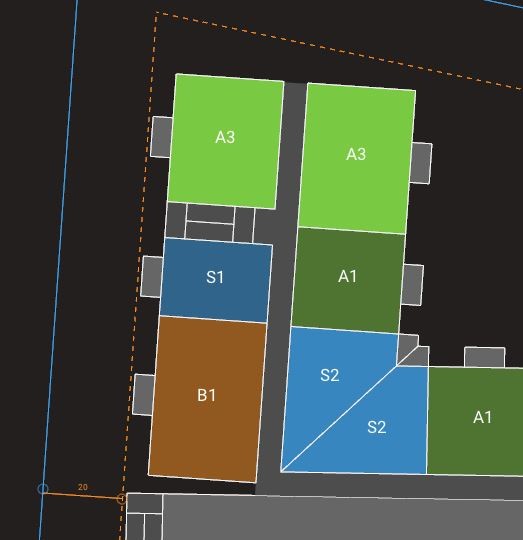
I get this statement all the time during software demos: "those inside corner units don't make sense."
We know this is an issue for many users, but it is an issue that does not have a straightforward solution because every firm solves this problem differently, and every firm is very proud of their solution — and they should be. It is an extremely hard problem to solve.
What is the actual problem with inside corner units?
My partner put it this way: the ratio of skin to common corridor is out of whack on the inside corners. The base ratio might be 6 units of common corridor to 1 unit of glass. Outside corner units have the opposite problem: 1 unit of common corridor to 6 units of glass. So what do designers do to increase this ratio more favorably? Tons of different things.
Three basic ways to increase the skin to common corridor ratio:
- Chamfer
- Carve
- Avoid the Issue
Combinations of these
- Chamfer then Carve
- Carve then Chamfer
- Chamfer then Avoid
- Avoid then Chamfer
- Carve then Avoid
- Avoid then Carve