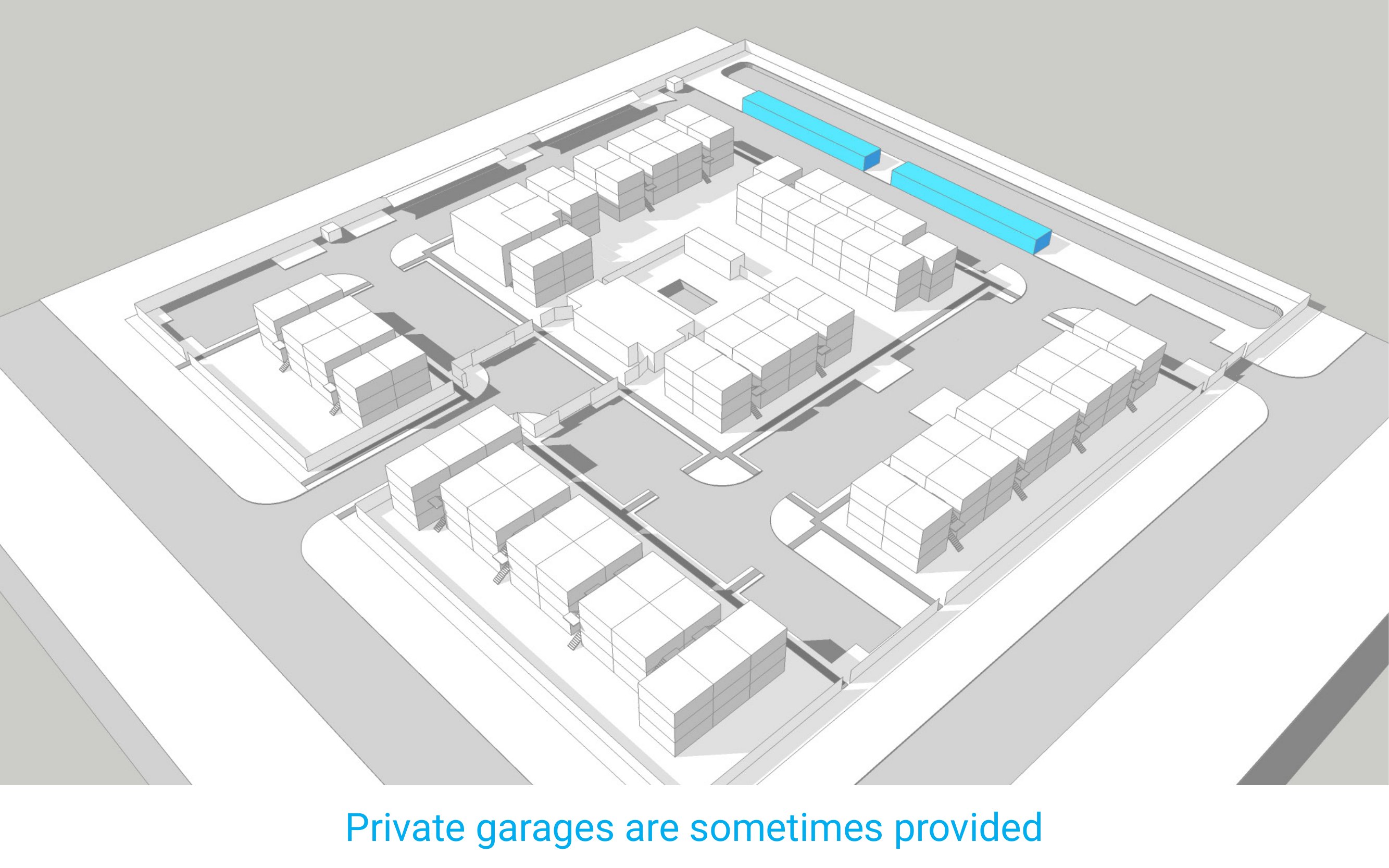
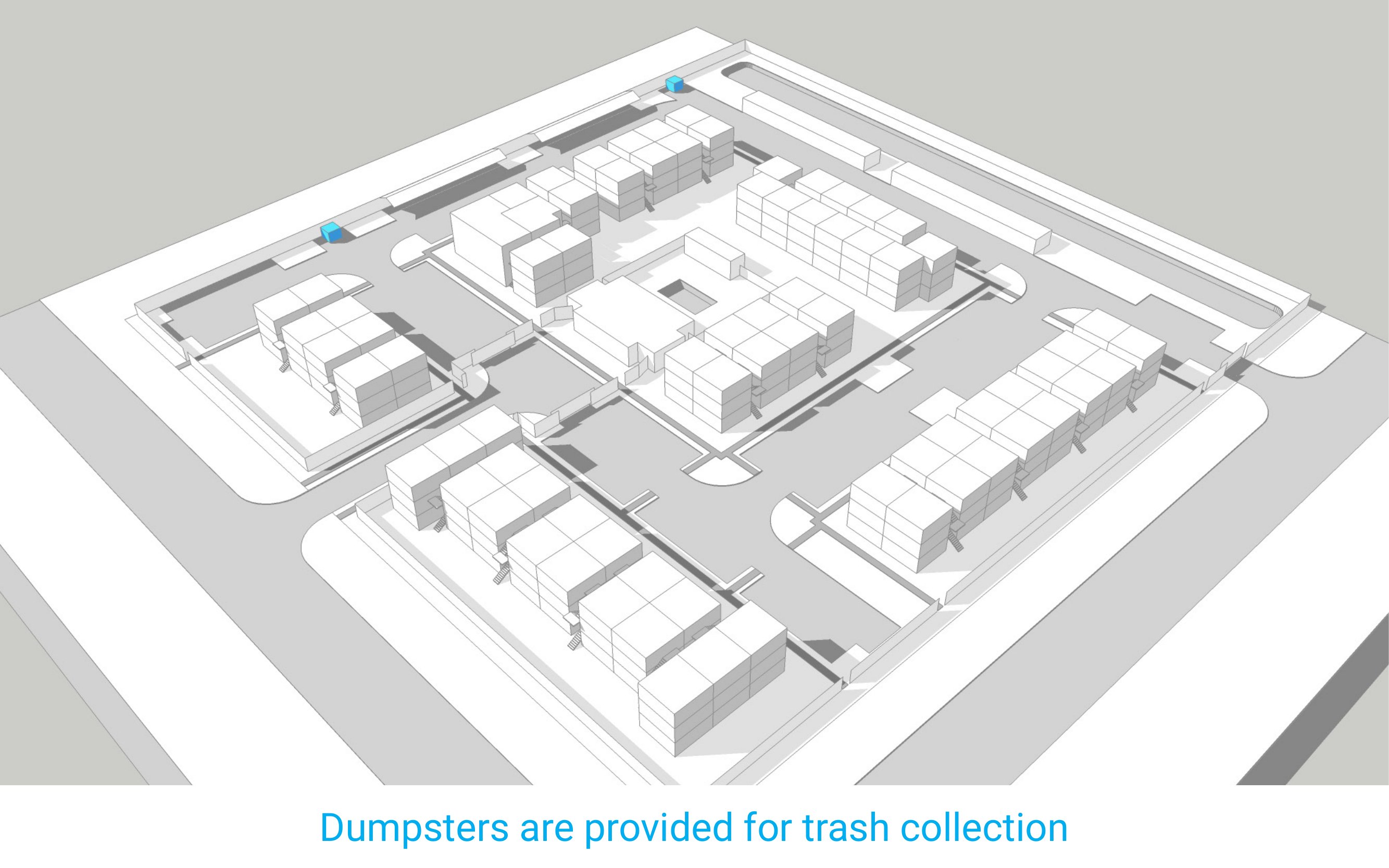
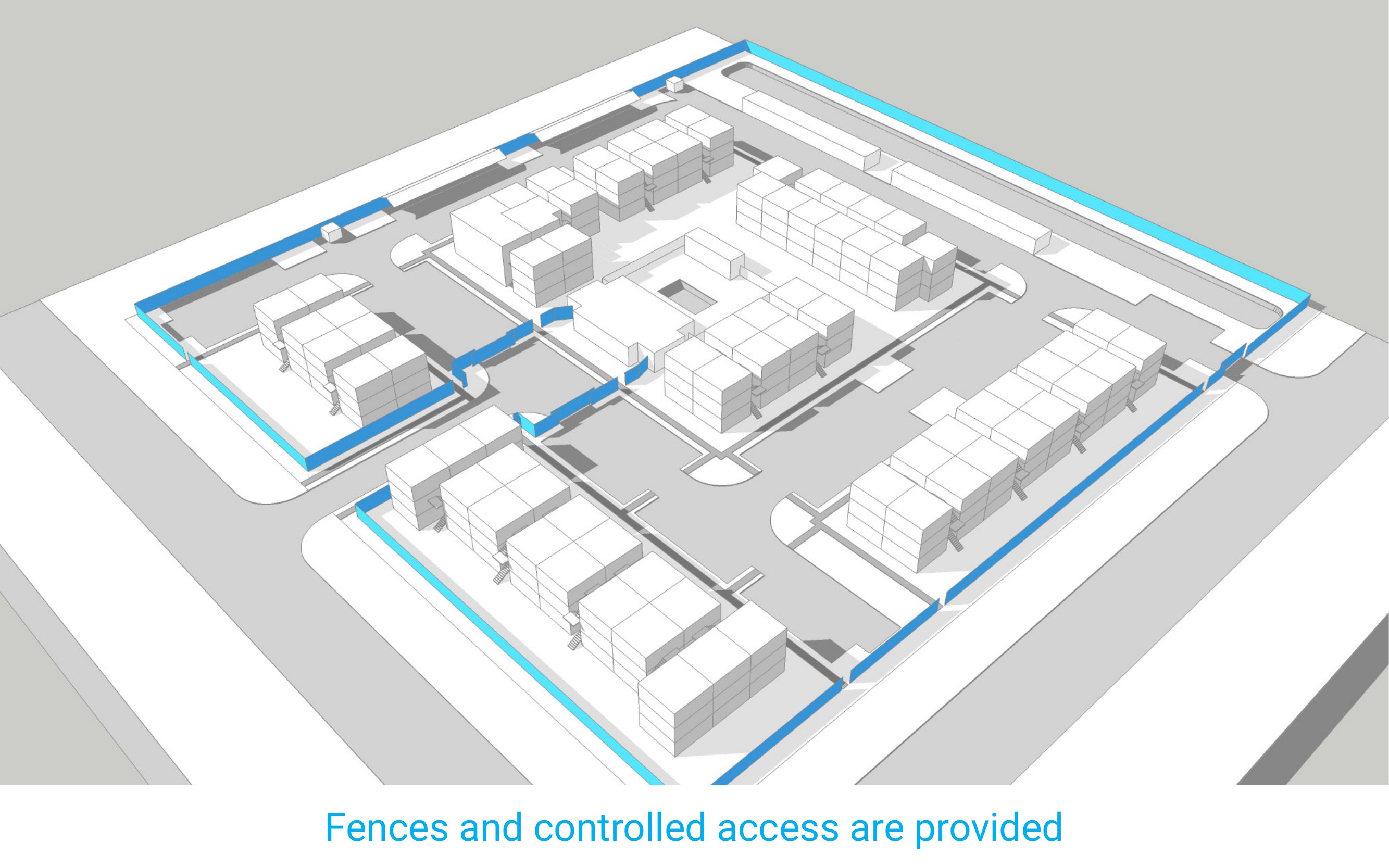
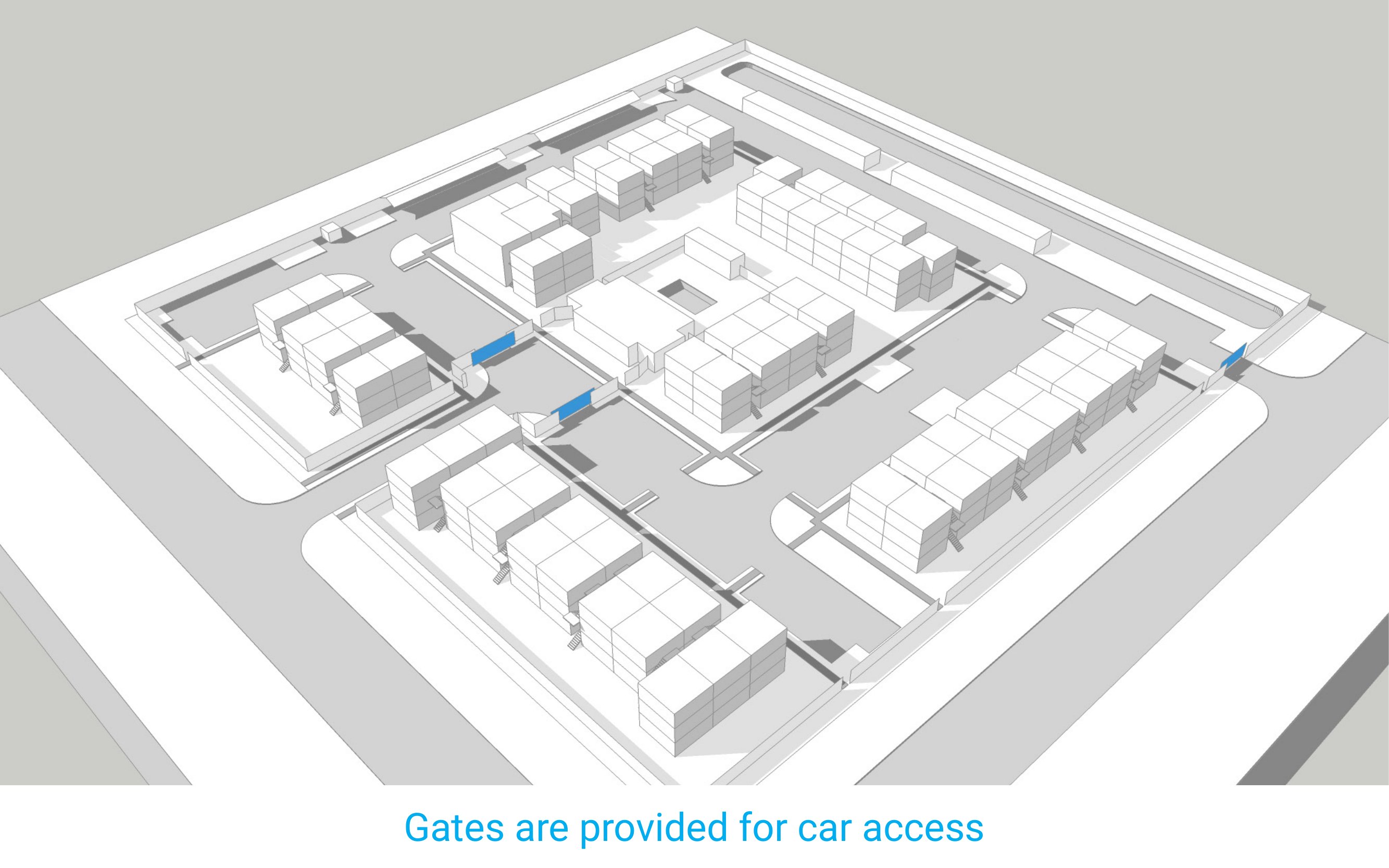
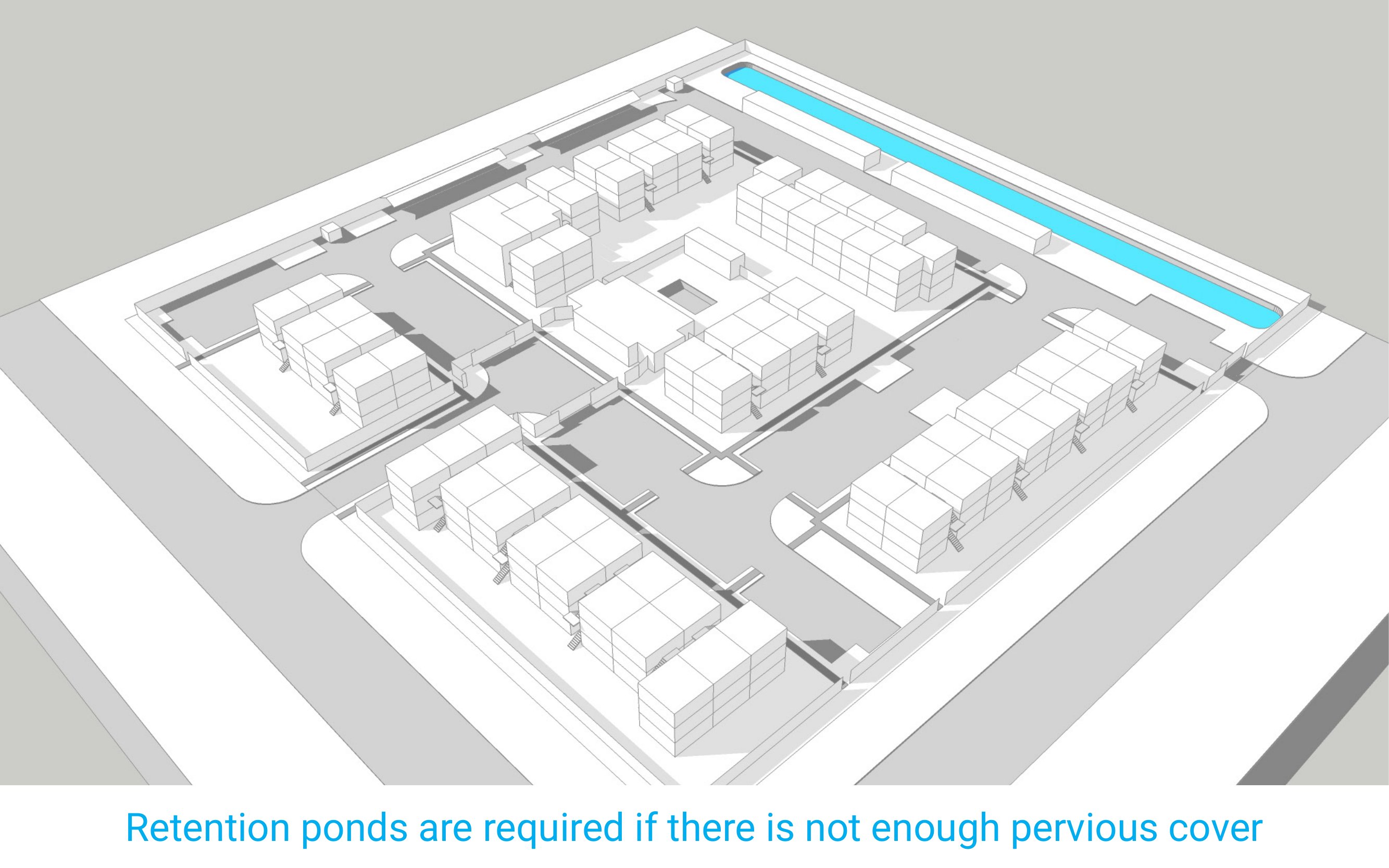
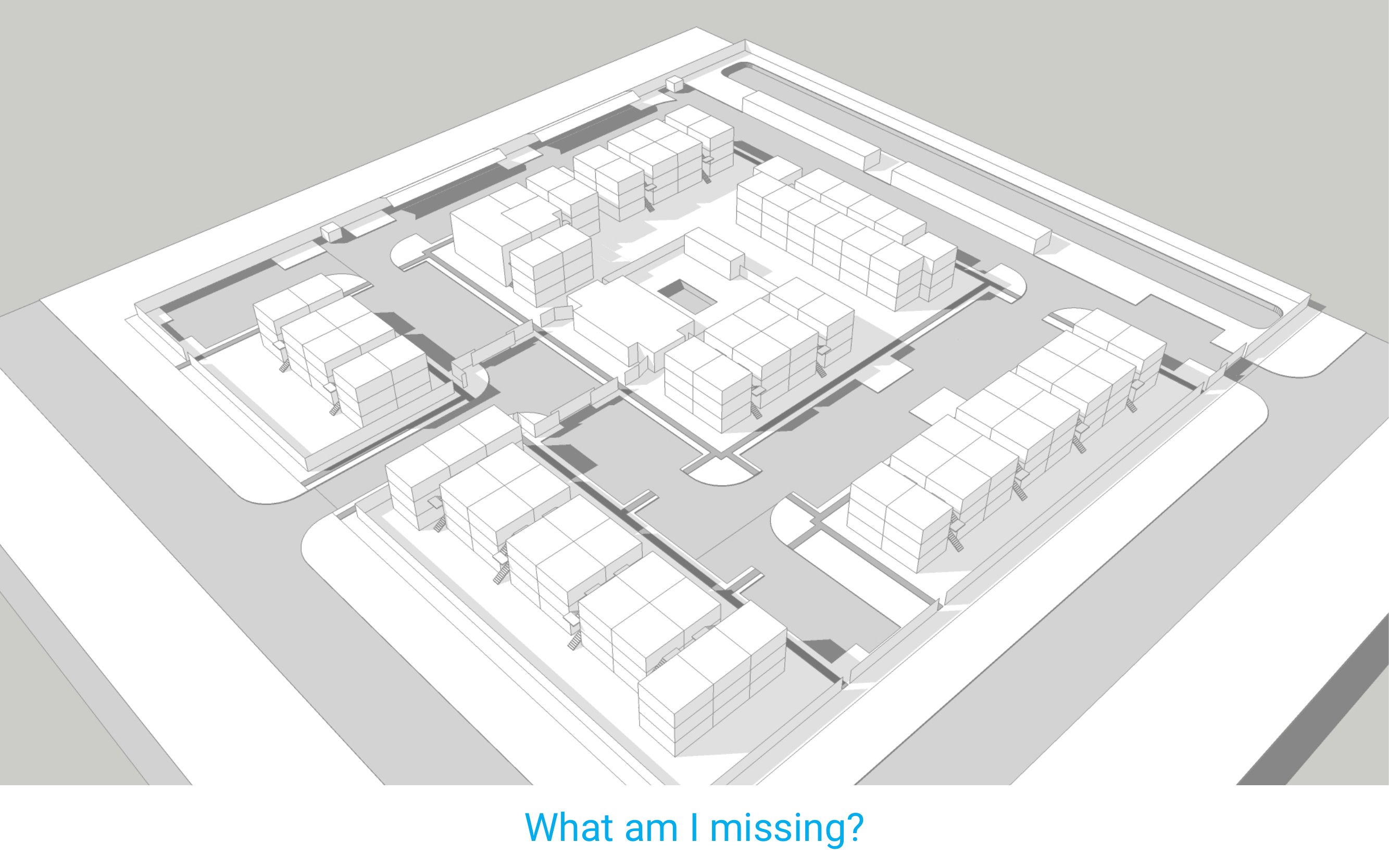
Give a 20 acre site to five different architects, you will receive in return five different site plans. Garden deals are simultaneously the most open-ended and the most constrained product type in multifamily. Open-ended because the site gives you room to move. Constrained because the rules — fire lanes, building separation, parking ratios, stormwater — end up writing most of the plan for you.
What follows is an attempt to make that anatomy visible. The 3D diagrams below peel back the typical garden apartment complex layer by layer, showing what each constraint looks like in three dimensions and why it lands where it does.
The Site
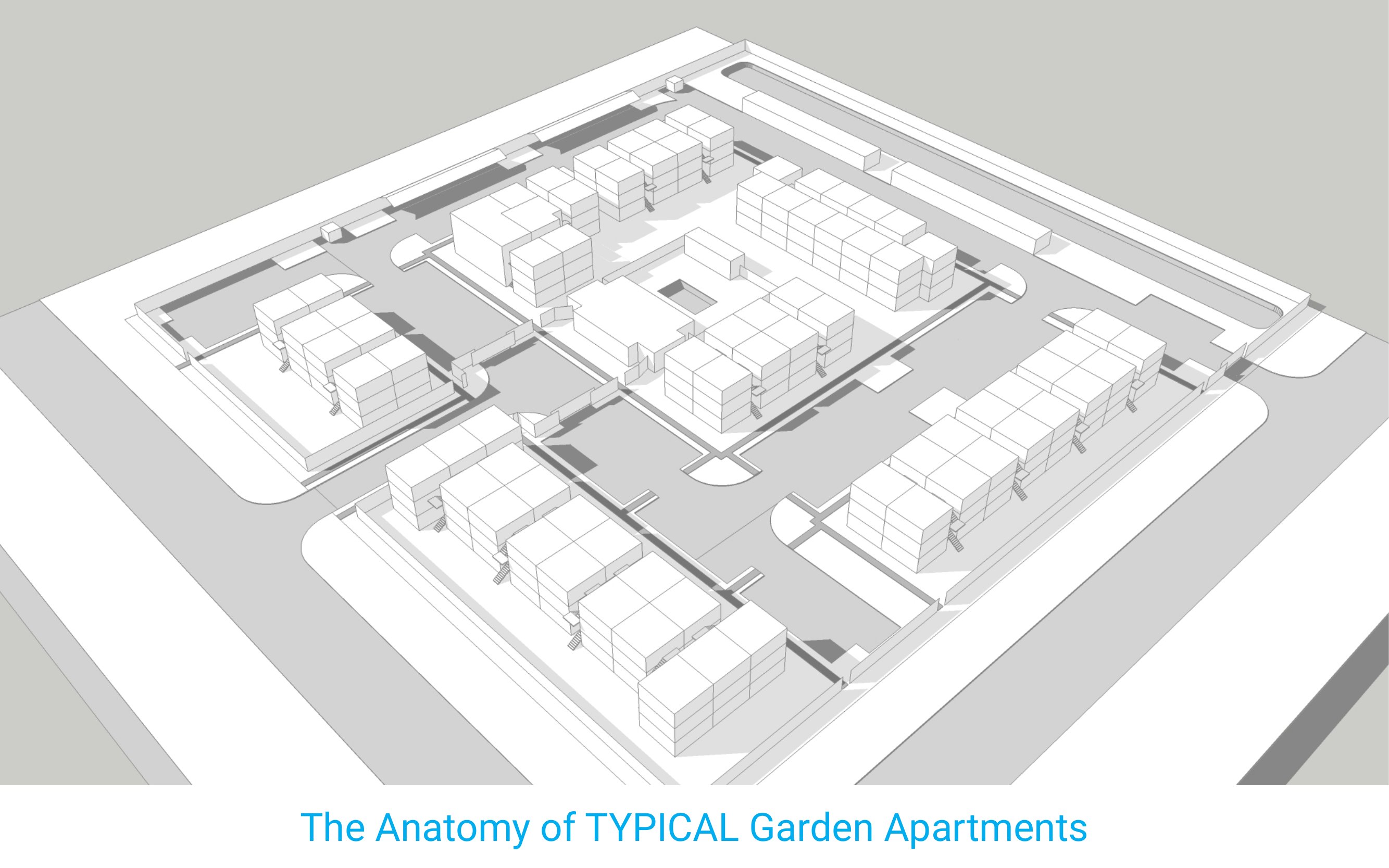
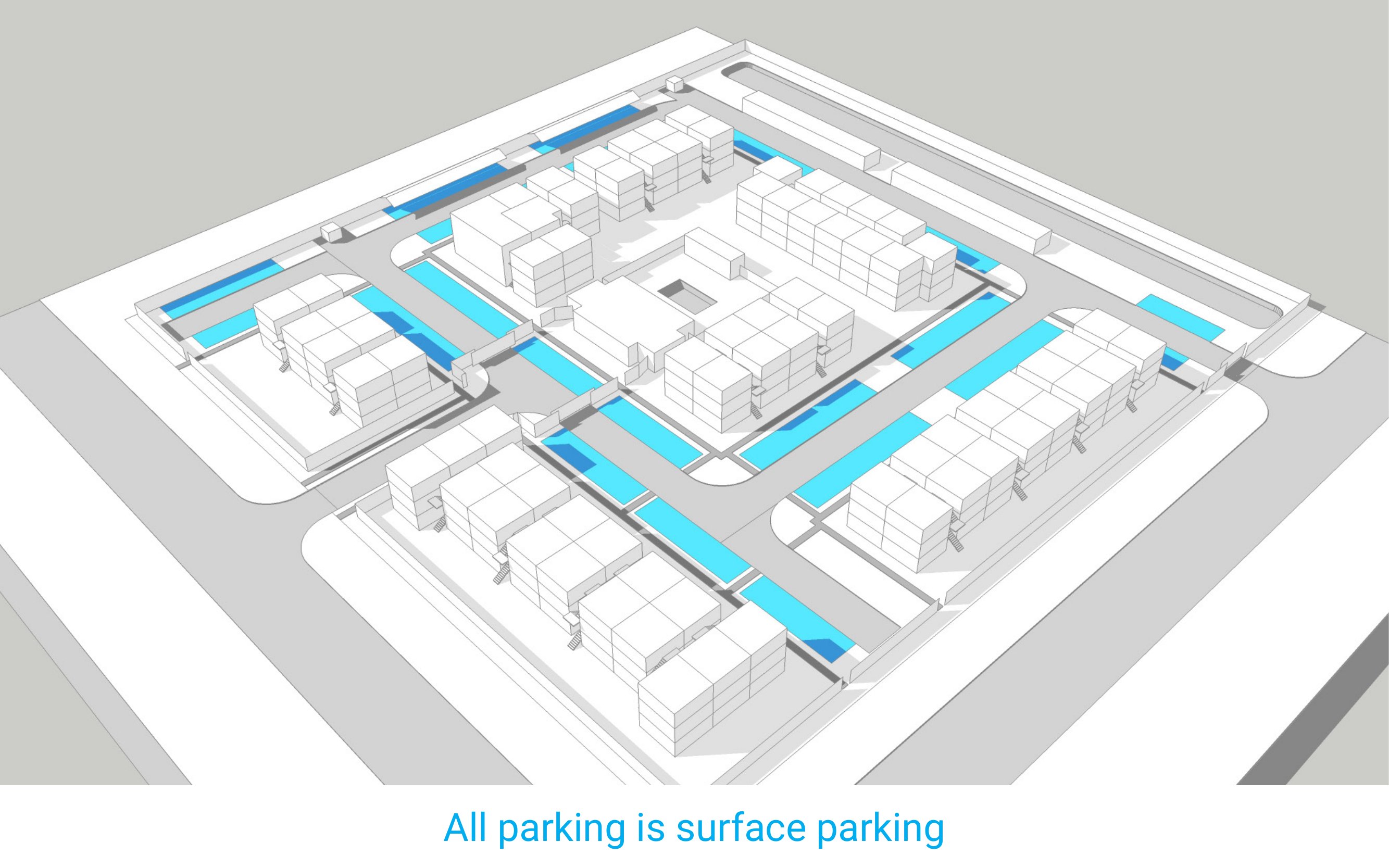
Sites are typically larger than 4 acres. Below that threshold you run out of room before you hit a viable unit count — the fire lane loop, the building separation requirements, and the parking field consume too much of the site to leave enough buildable area. The site itself is the first constraint, and four acres is roughly where the math starts to work.
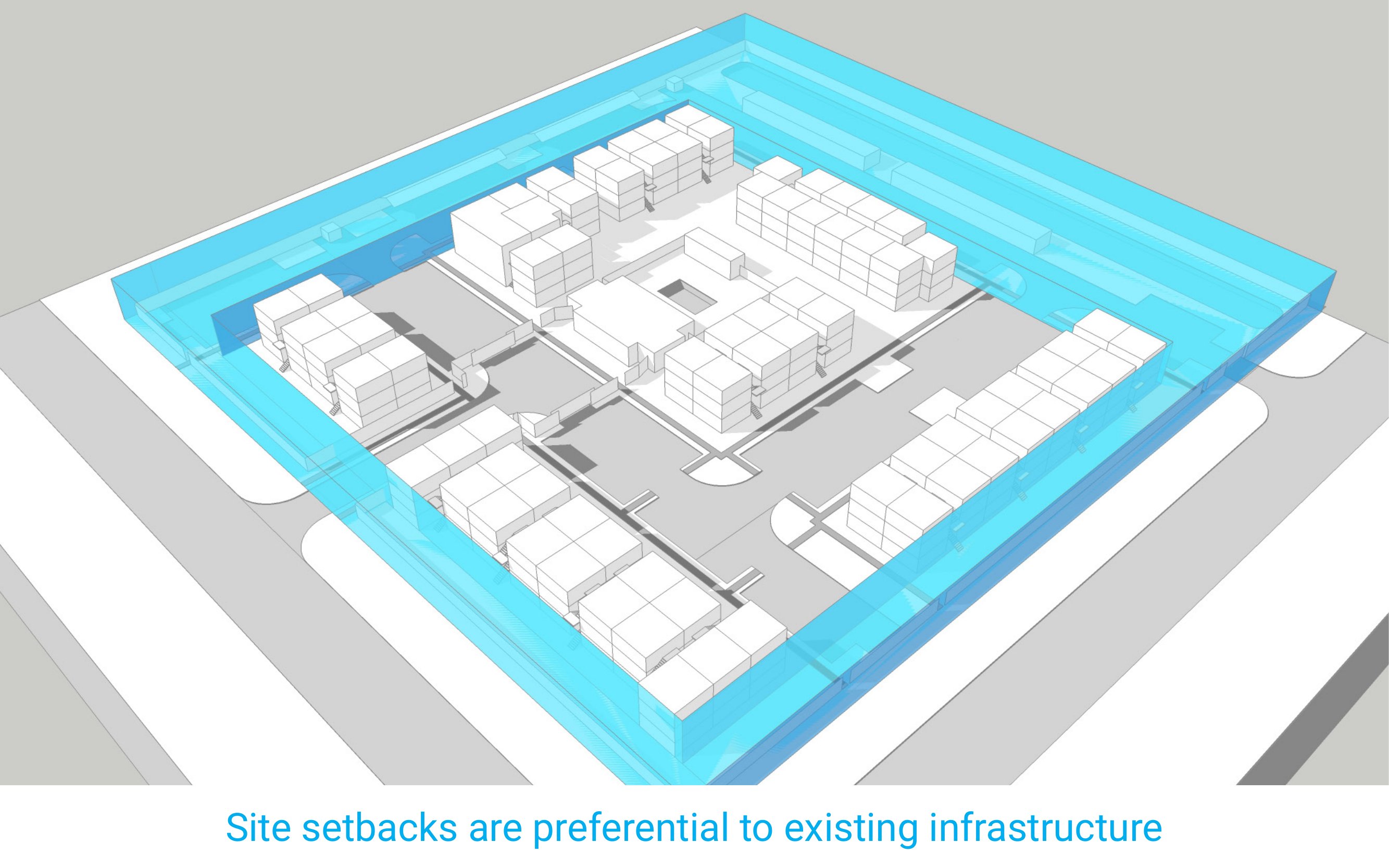
Setbacks are rarely arbitrary. They defer to the existing infrastructure at the perimeter — the utility easements, the road widths, the adjacent property relationships. The building envelope isn't drawn from the inside out; it's drawn from the edges in.
Circulation and Code
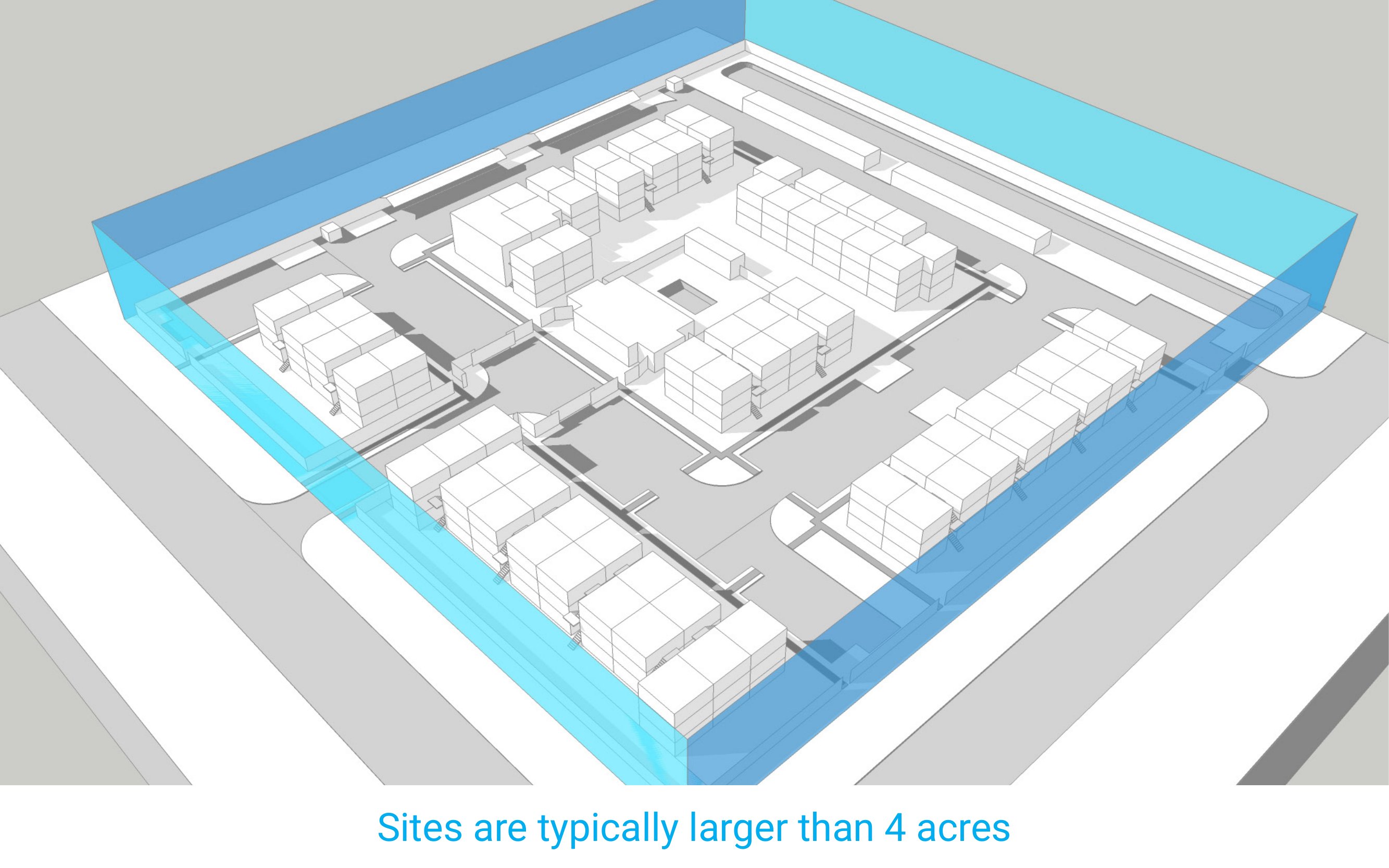
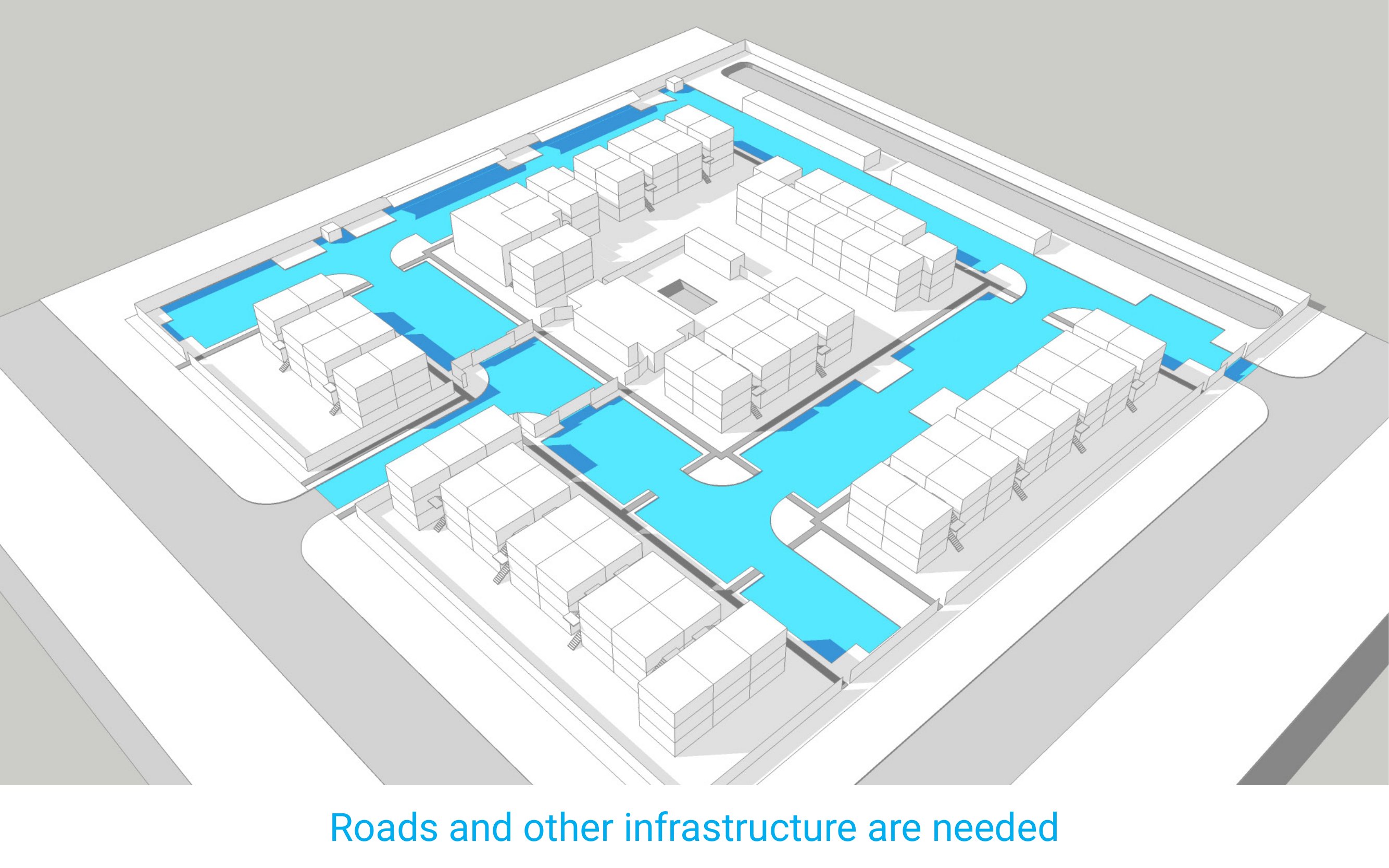
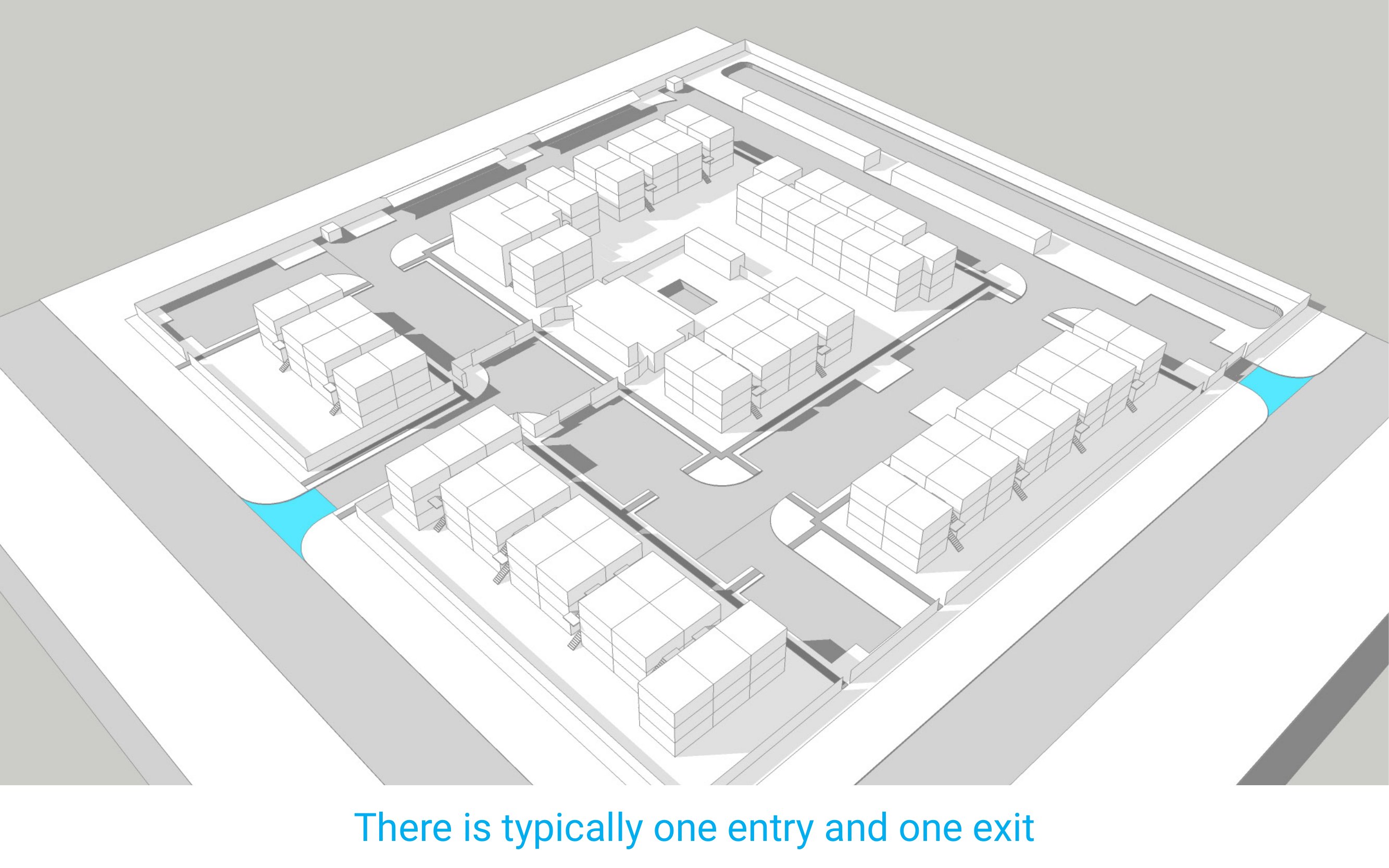
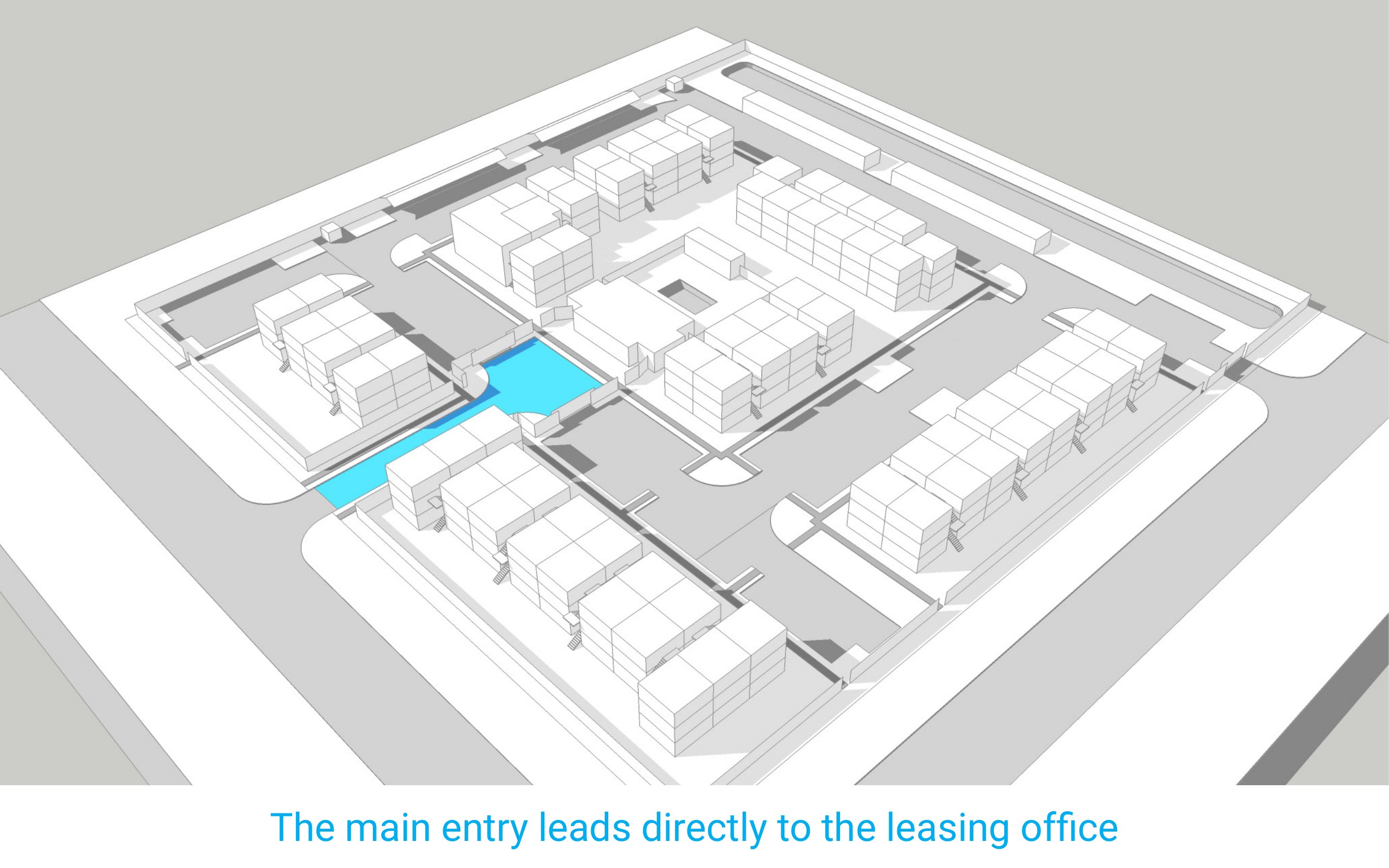
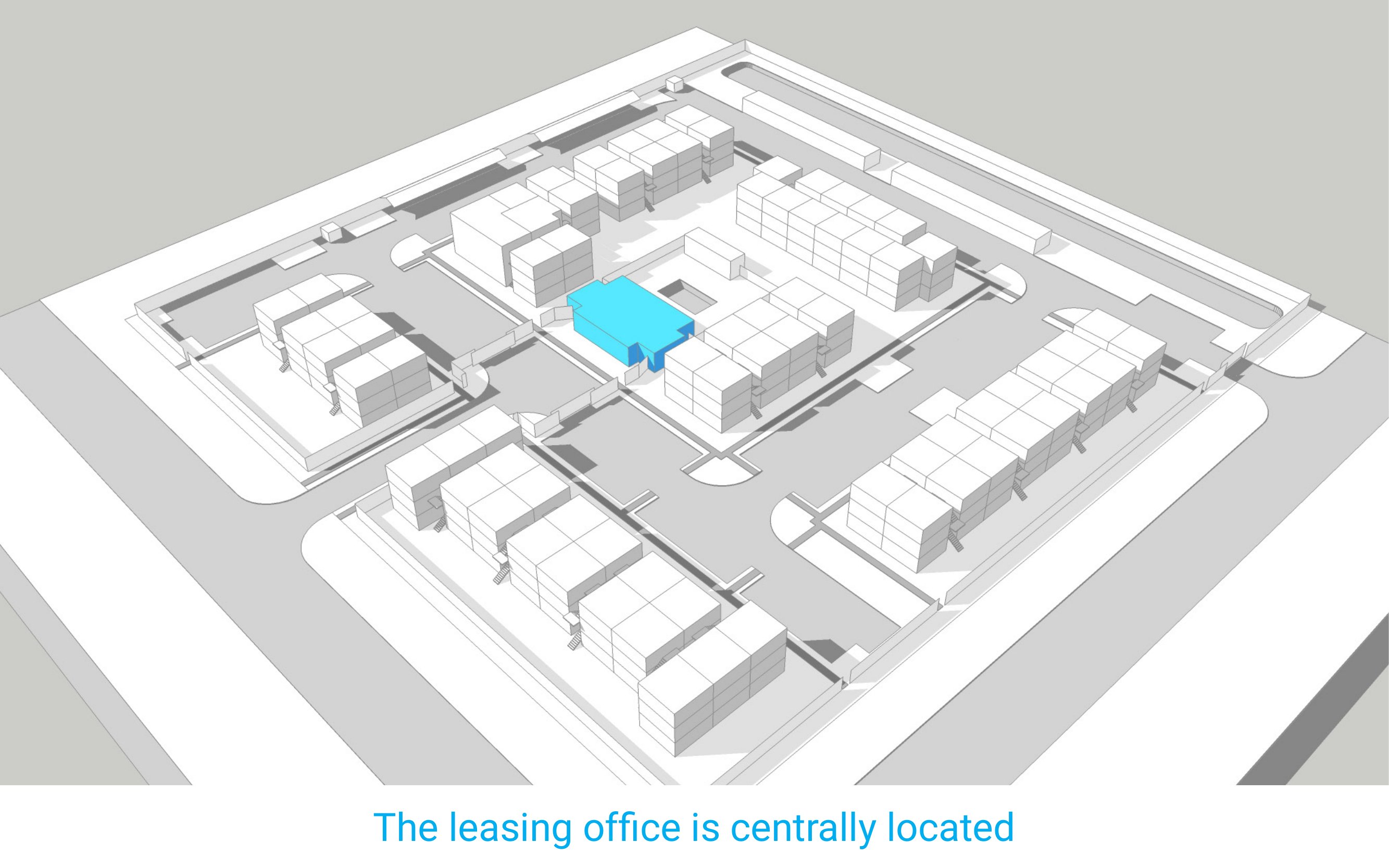
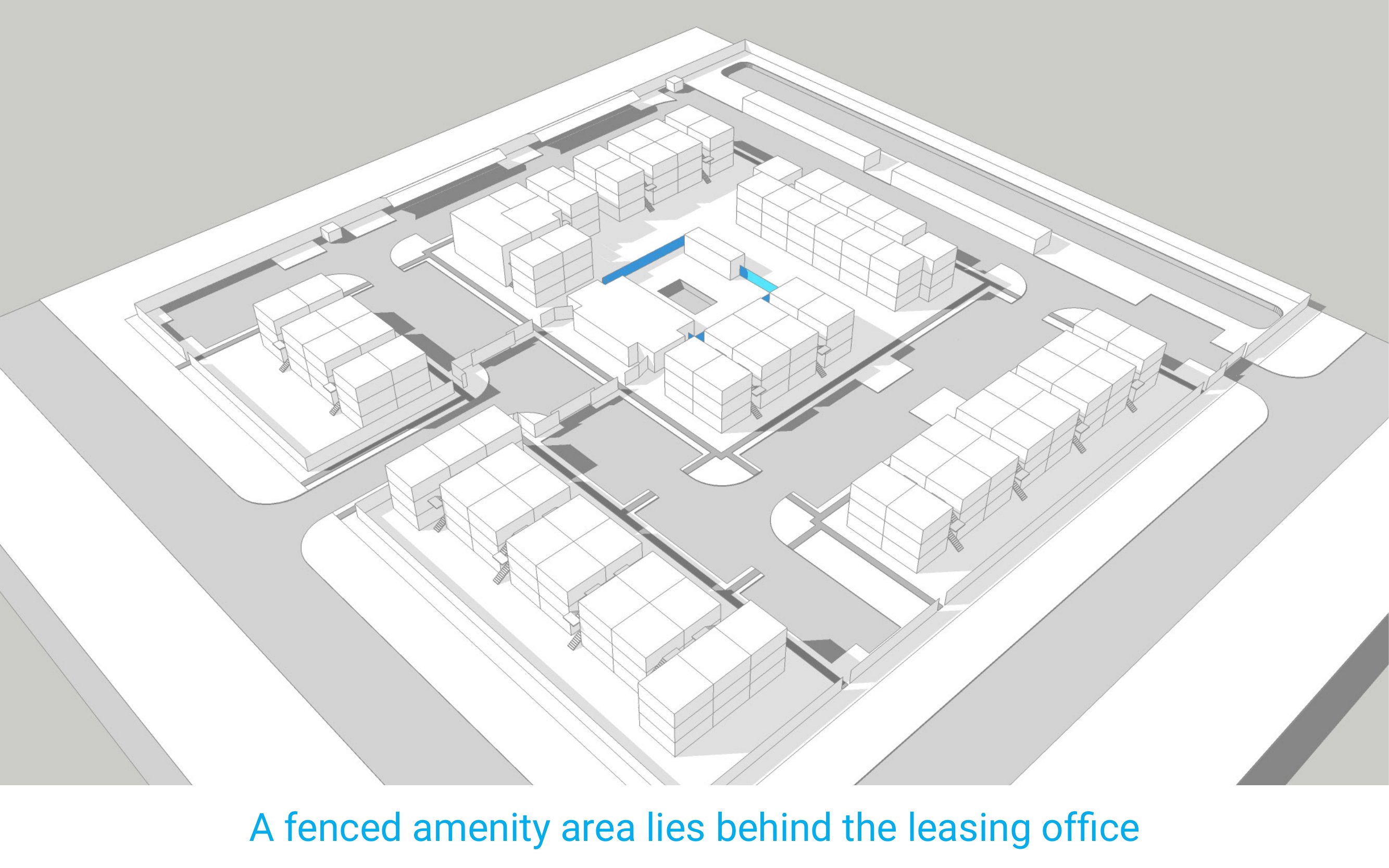
One entry, one exit. That's the standard. The main entry drops you directly at the leasing office, which is centrally located so that a prospective tenant gets a full view of the amenity zone on approach. This isn't incidental — the path from car to lease is a designed sequence.
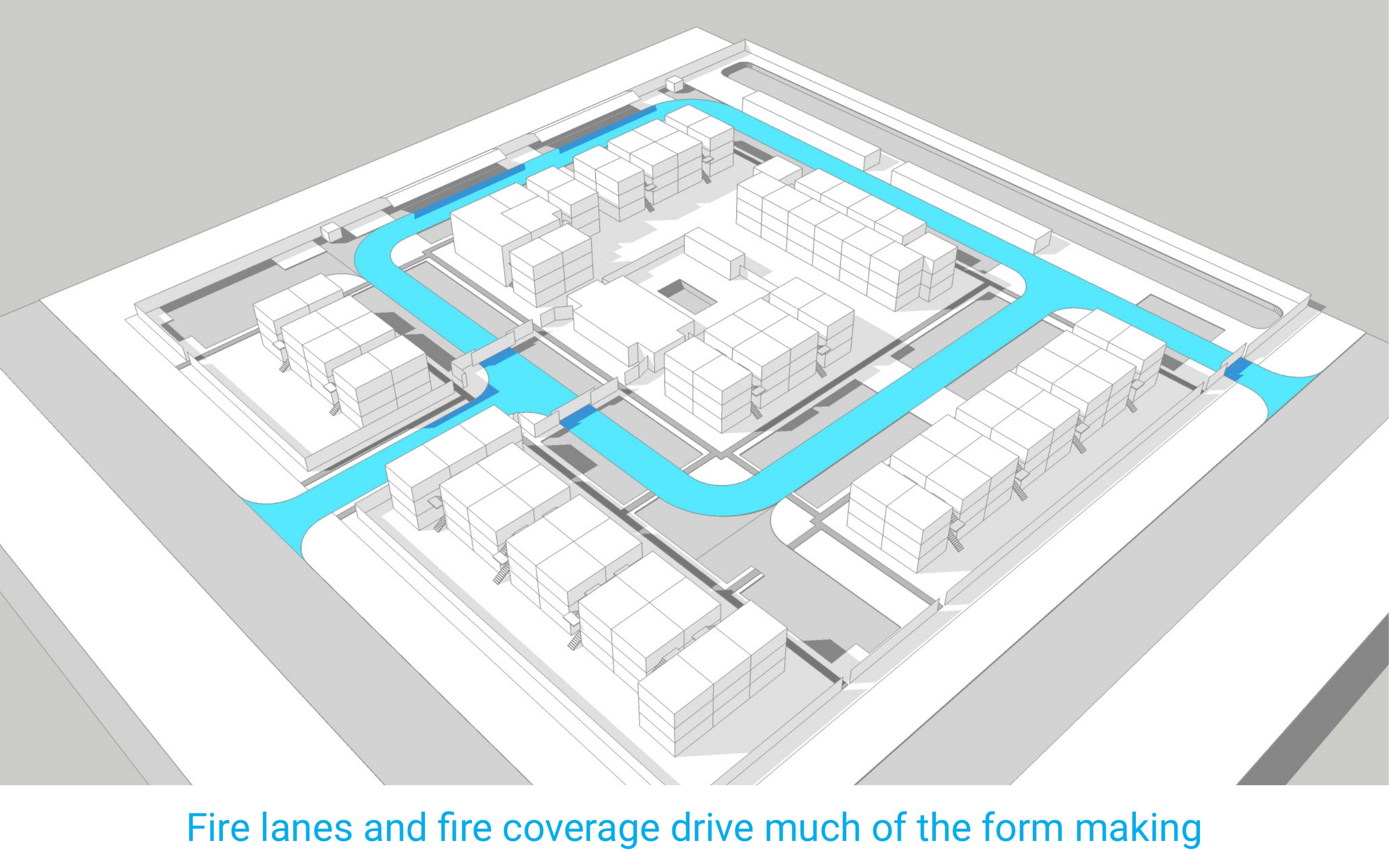
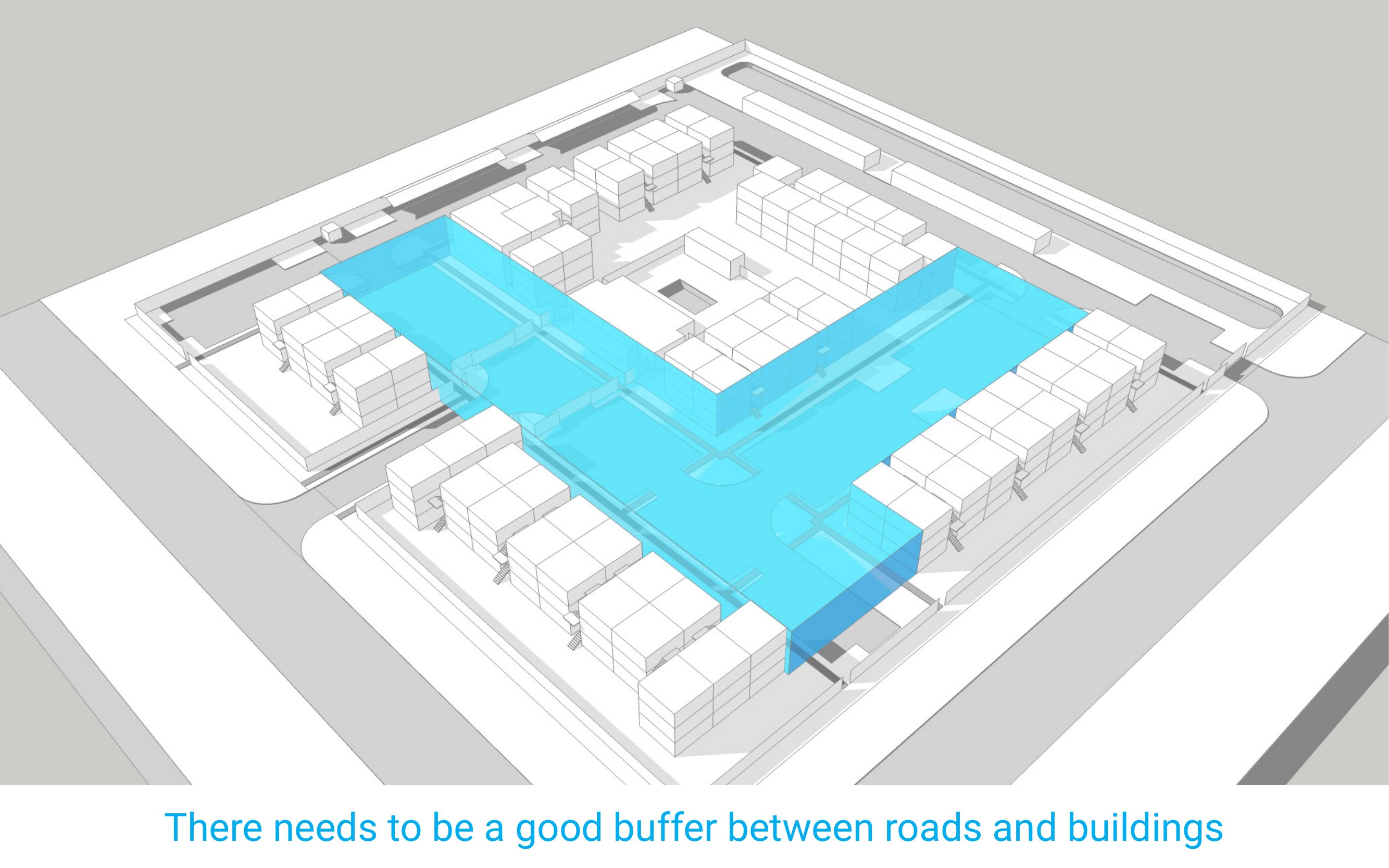
The fire lane loop is the most powerful form-making constraint on a garden deal. It has to reach within a certain distance of every building face. On a large site, that loop becomes the primary organizing element. Everything else — parking, buildings, amenity — arranges itself around the fire lane, not the other way around.
Buildings
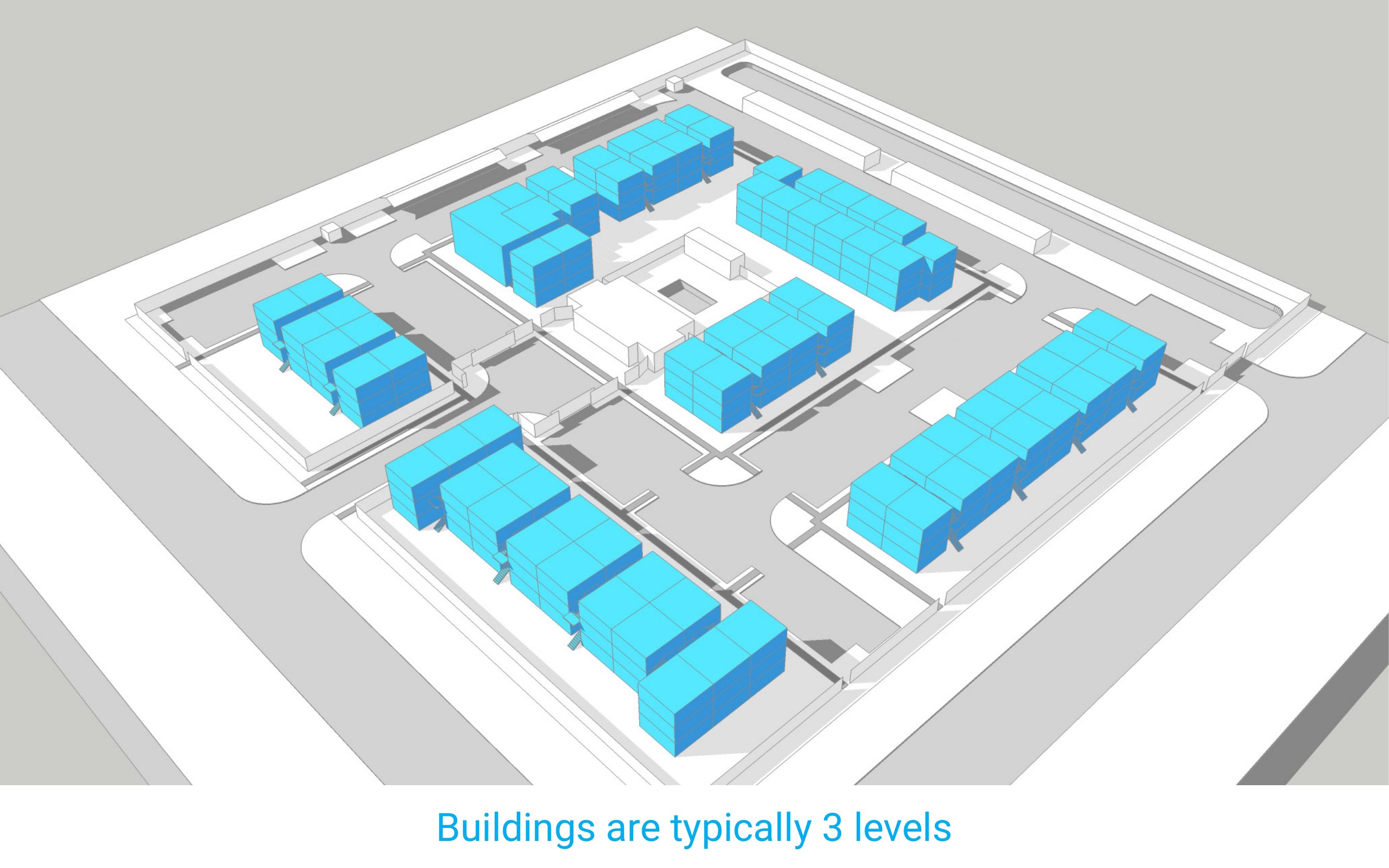
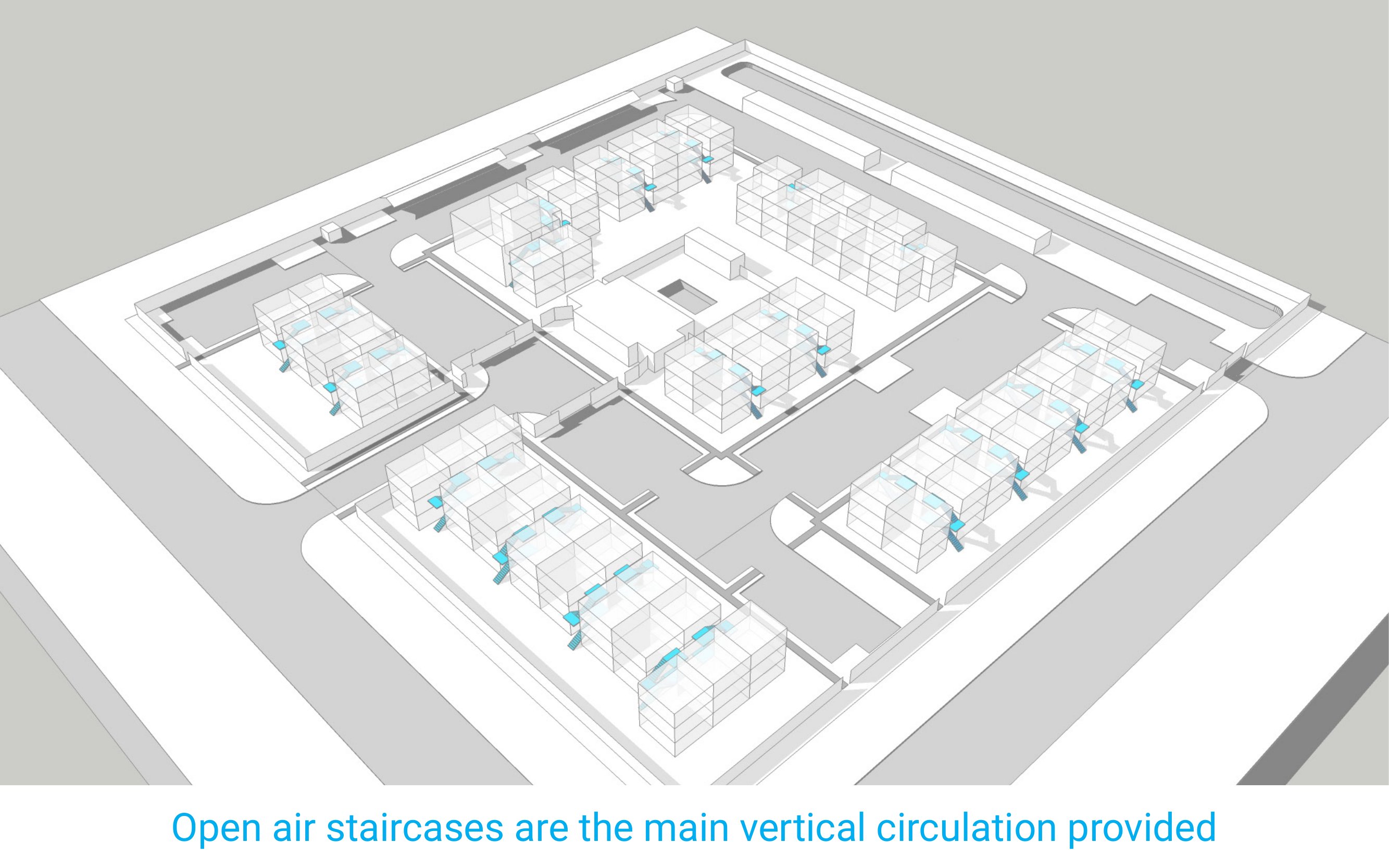
Three stories is the standard. It's the maximum you can build in wood frame without a sprinkler system upgrade, and it's the height at which open-air staircases remain code-compliant as the primary vertical circulation. Four stories changes the calculus significantly.
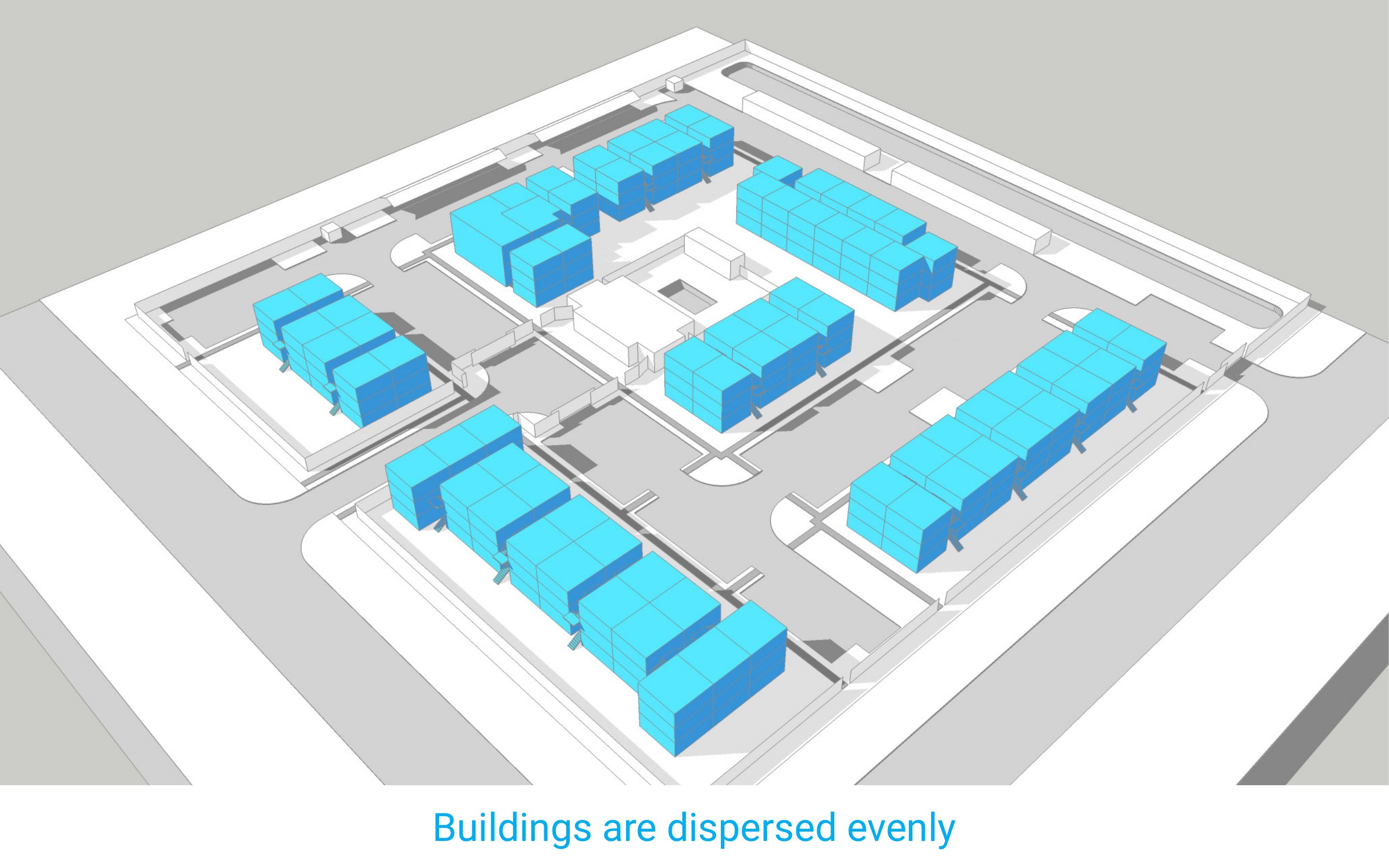
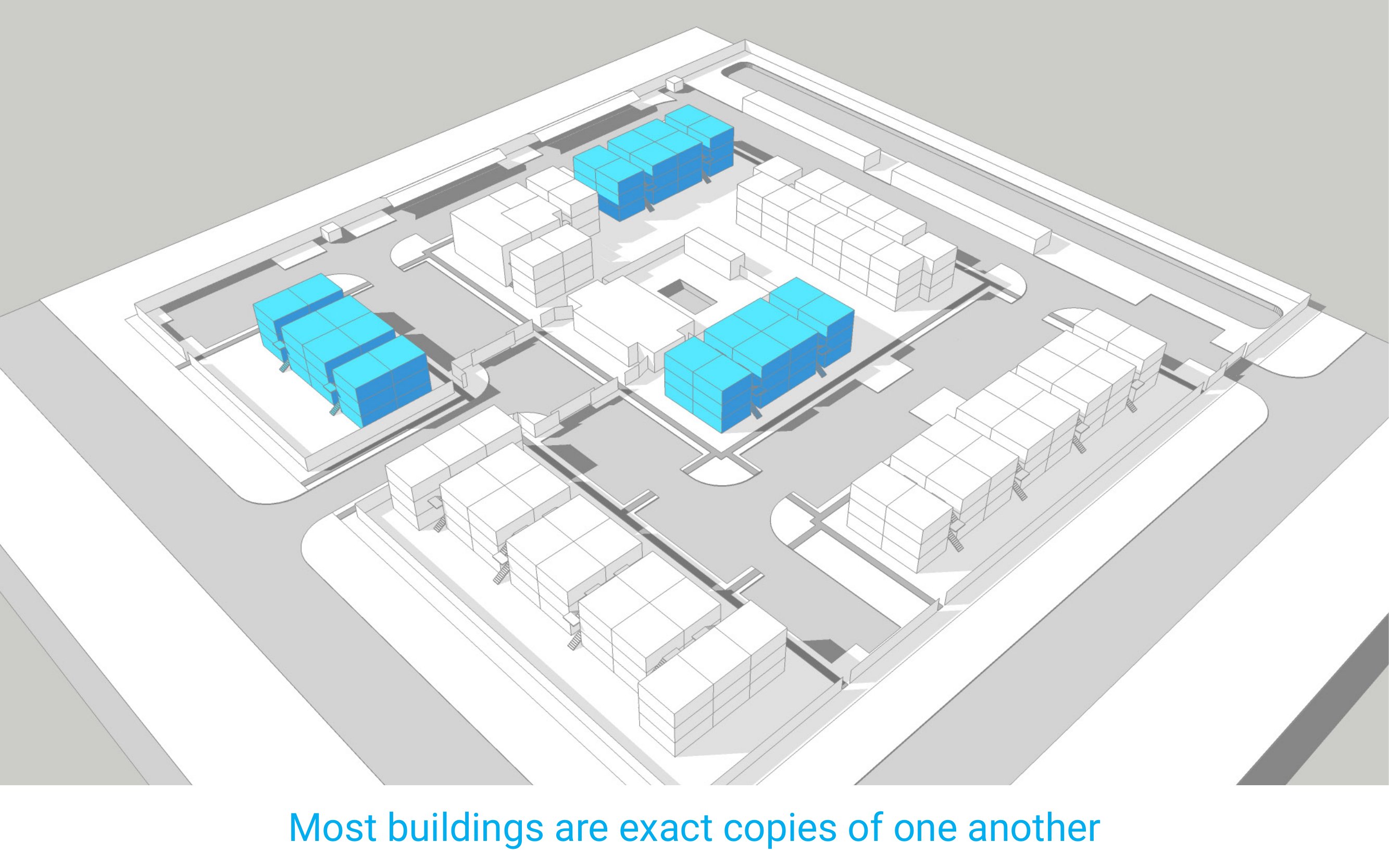
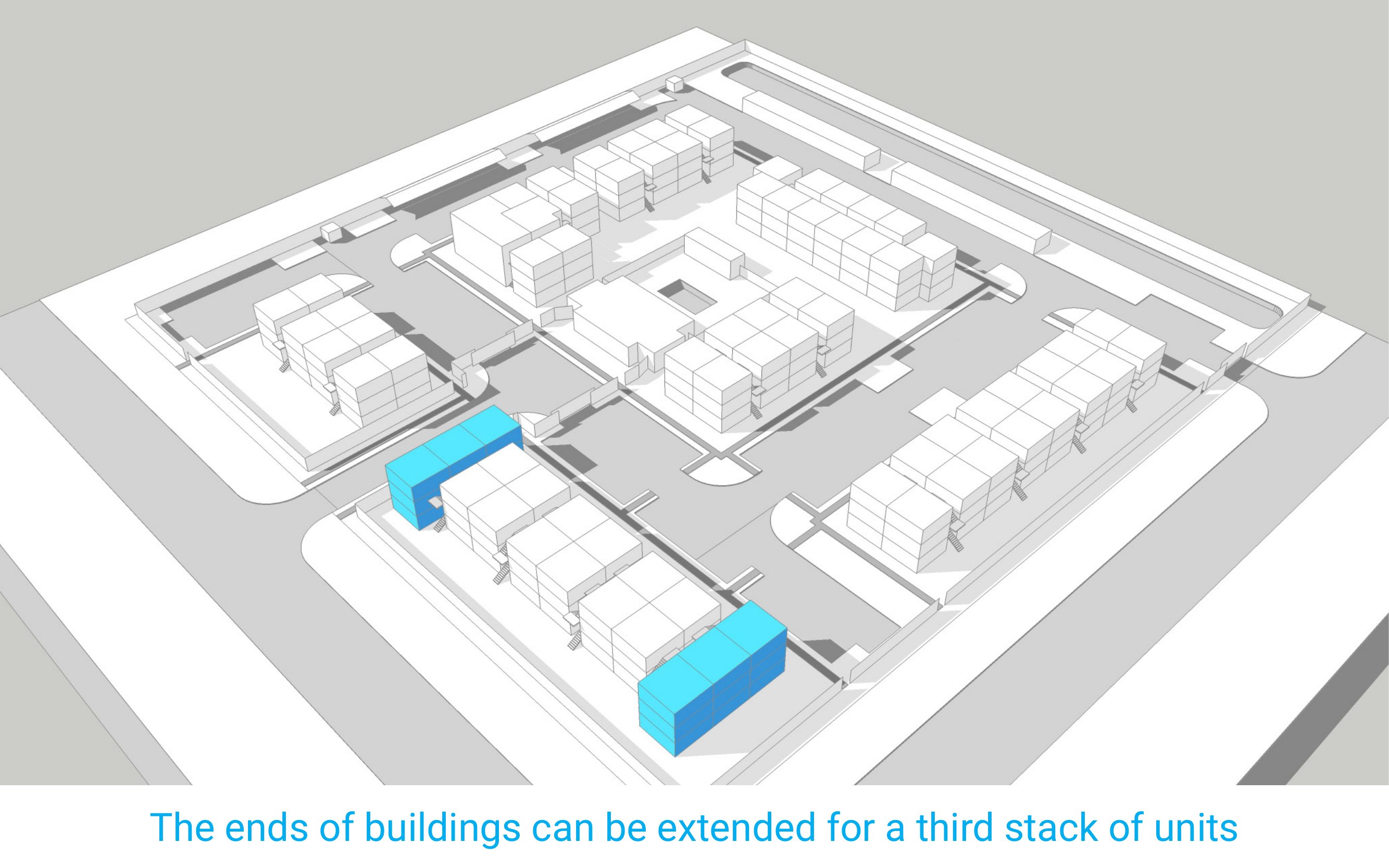
Most buildings on a garden site are exact copies of one another. This isn't laziness — it's the logic of repetition. One set of construction documents, one set of shop drawings, one learning curve for the framing crew. The unit count climbs by multiplying a proven module across the site. The ends of buildings are sometimes extended with a third unit stack to pick up additional count without adding another full building.
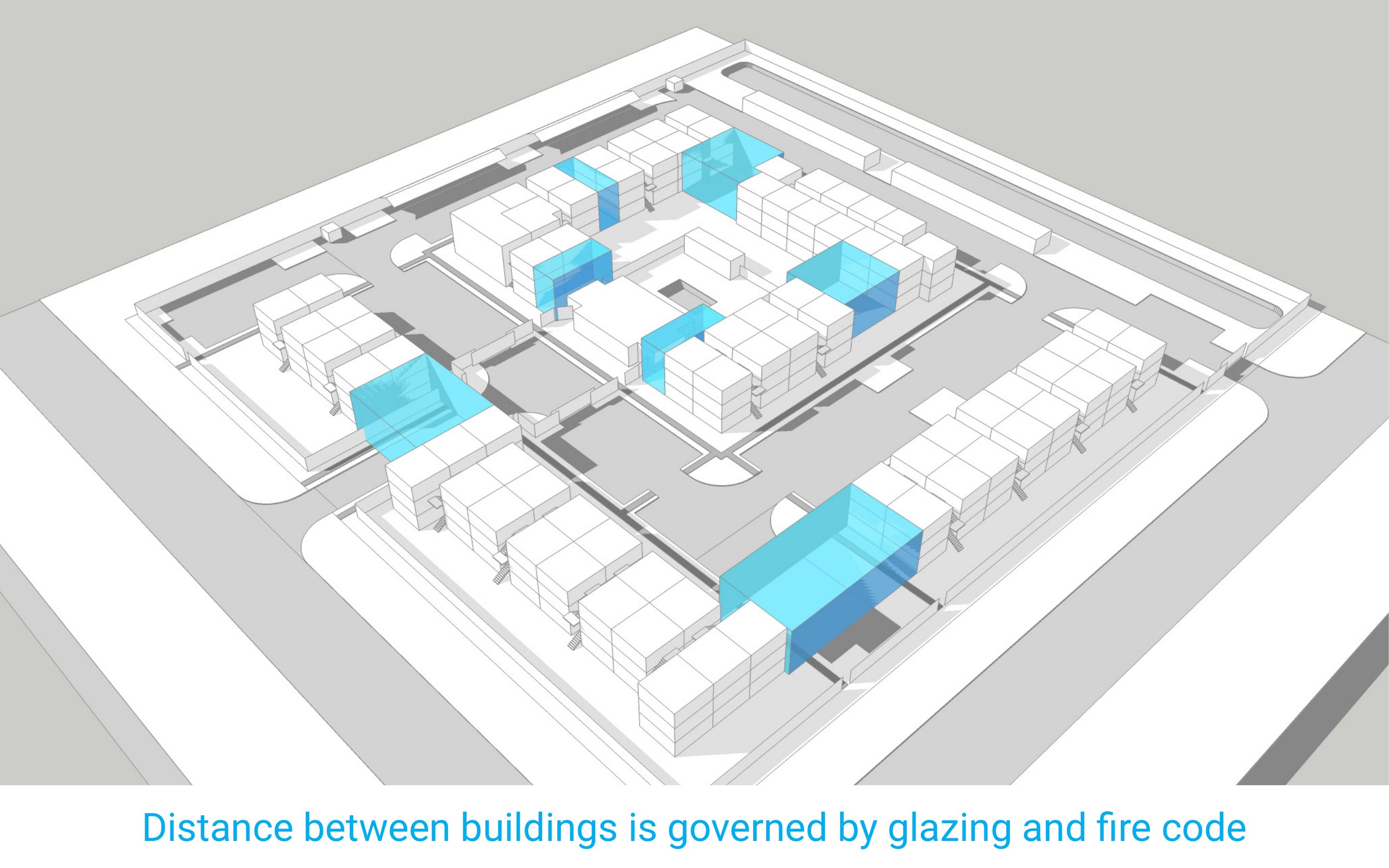
Building separation is governed by glazing percentage and fire code. More glazing means more separation required. The gap between buildings isn't air — it's a regulated dimension derived from the window schedule.
The Logical Approach
If garden apartments resist a single correct answer, the only path forward is a logical ordering of decisions. Solve each constraint in sequence rather than simultaneously, and the plan emerges from the rules rather than fighting them.
Start with the site boundary and the setbacks. That gives you the buildable area. Apply the fire lane loop. That gives you the site organization. Place the entry and the leasing office. That gives you the arrival sequence. Distribute buildings according to the separation rules and the parking ratio. Count the units. Check the pro forma. Iterate.
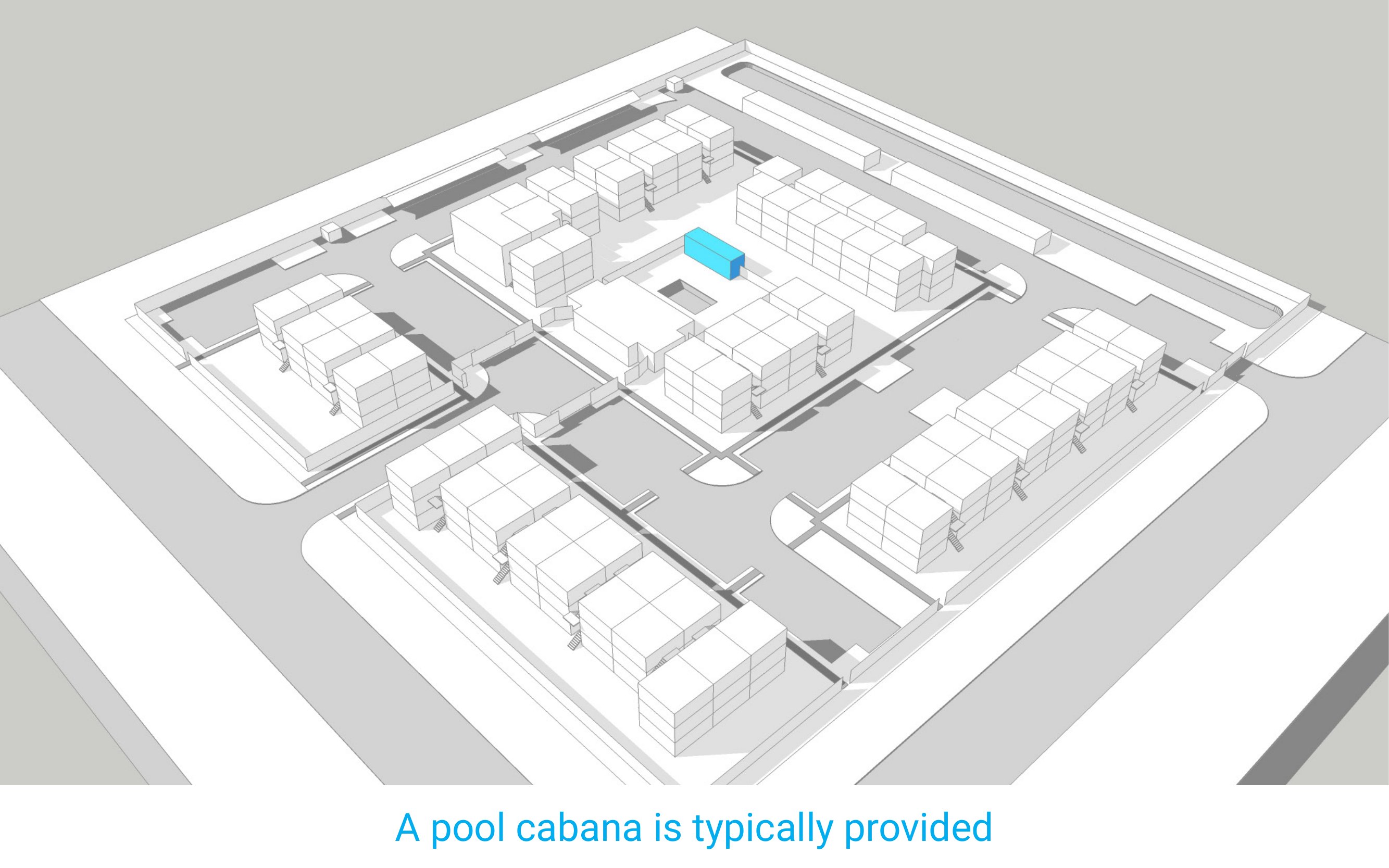
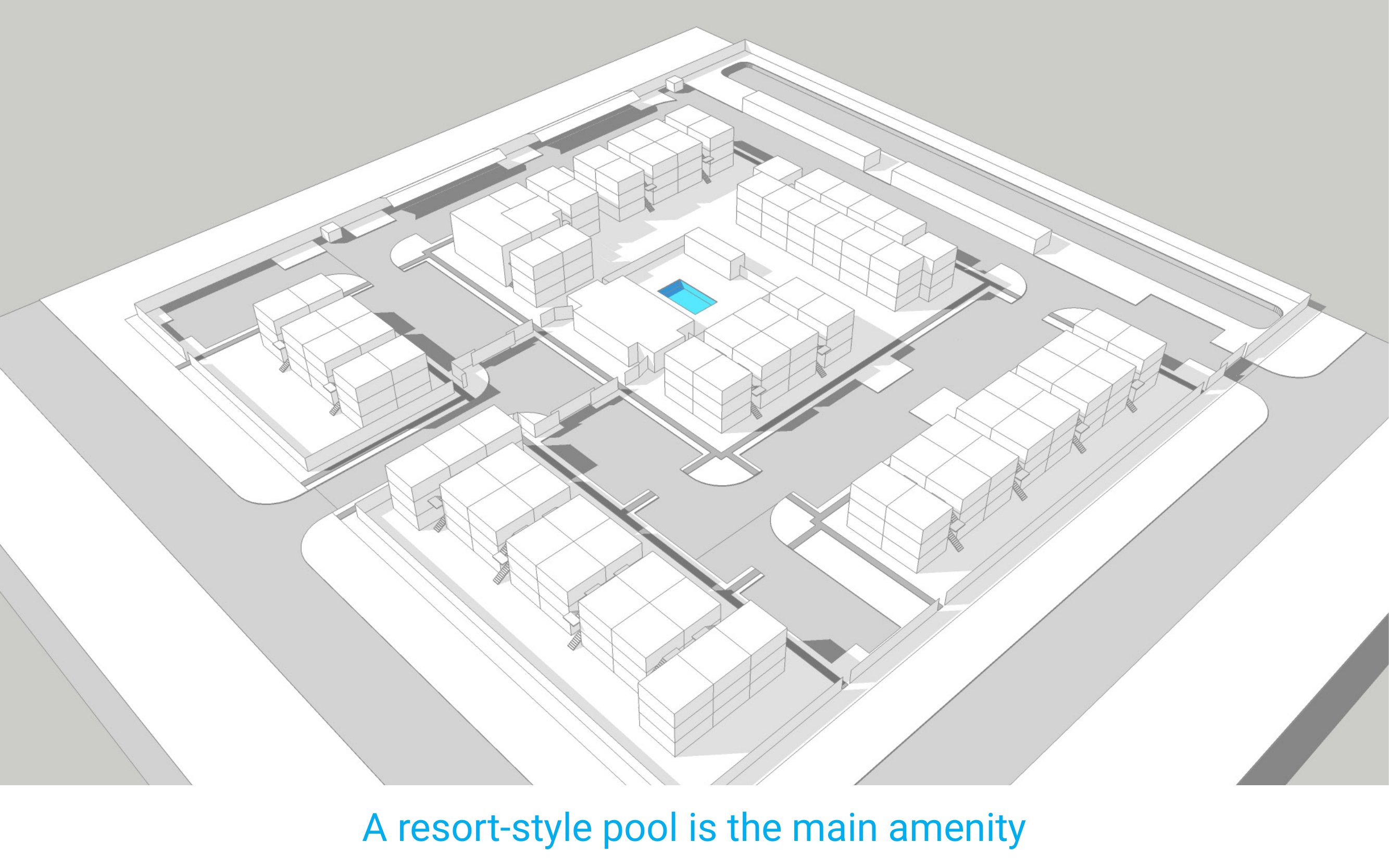
The amenity package — pool, cabana, fenced yard behind the leasing office — is placed last because it fits in the residual space between buildings. It's not designed; it's located. The pool is a resort-style amenity because that's what the market expects, not because it was the best use of that square footage.